Last week I spoke about the very beginnings of OLPH. Before I move on with the incredible story of our parish, I would like to take a step back and look at how Ybor City was established. It is a wild, tragic, and dramatic story.
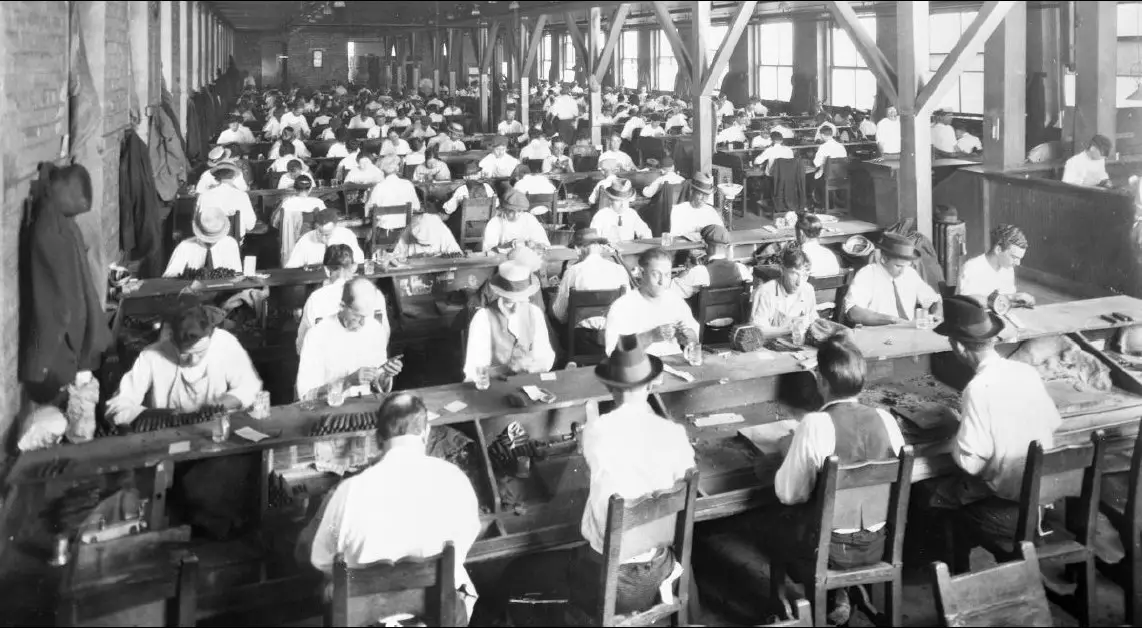
In the mid-1800s to 1886, believe it or not, Key West was the cigar capital of the United States. Both Cuban tobacco and Cuban immigrants, along with other immigrants, hand rolled cigars in Key West. In the 1880s, at the height of its booming cigar industry, Key West was home to over 80 cigar cottages and factories. As Key West’s cigar industry was operating on all cylinders in the 1880s, a Spanish entrepreneur, Vicente Martinez Ybor, looked for a new location to expand his operations. As he searched for a new location, the land northeast of downtown Tampa caught his eye. The mix of a great climate, a fully functional port, new railroad lines, and available land led Vincente Martinez Ybor to buy 40 acres of land in October of 1885. The purchase price of these 40 acres is said to have been $4000. Ybor City was born. Vincente Martinez Ybor wasted no time. He opened his brick cigar factory the following year in 1886. The factory was so large that it was the largest brick structure in Florida at the time.
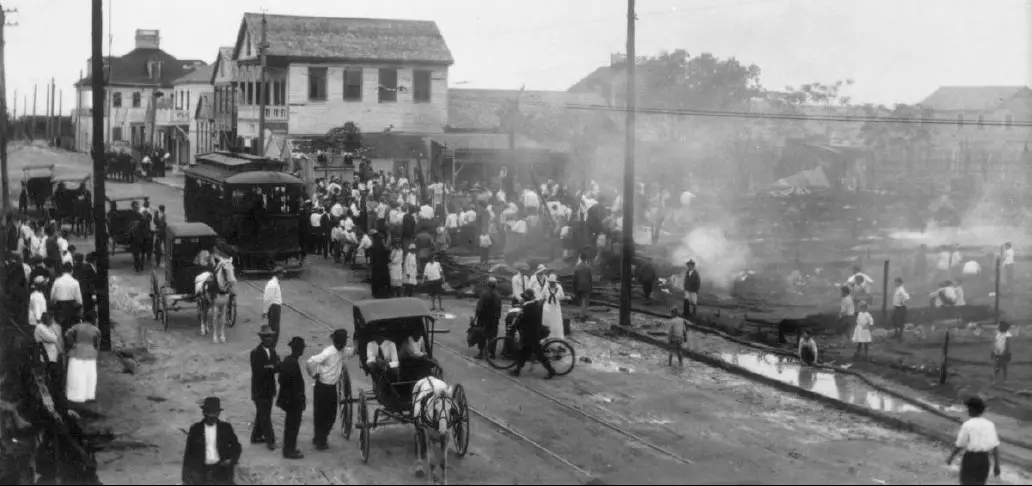
In that same year, 1886, tragedy struck Key West. Sometime after midnight but before sunrise on April 1, 1886, a blazing fire erupted and devastated Key West. It took 12 hours for the fire to run its course. In the end, nearly 20 major cigar factories and over 600 houses and warehouses were burned to the ground, costing over $2,000,000 in property damage. The fire is rumored to have been started by the Spanish Empire in conflict with Cuban Revolutionaries (It’s a complex story), but, in the end, no one actually knows how it started.
Overnight, dozens of cigar manufacturers faced uncertainty. As many cigar manufacturers discerned their future, Vicente Martinez Ybor told them of the great opportunity that awaited them in the newly formed Ybor City. Apparently, they could not resist. Over the next few years Ybor City would see a massive influx of cigar manufacturers, factories, and 3,000 people, many immigrants from Spain, Cuba, and Sicily.
With the influx of people to Ybor, a parish (and school) was needed to spiritually guide them. Welcome to our beginnings!
A little side note: Vicente Martinez Ybor died at the age of 78 on December 14, 1886 before Ybor was heavily developed.
Desde el Escritorio del Padre
La semana pasada hablé sobre los inicios de OLPH. Antes de continuar con la increíble historia
de nuestra parroquia, me gustaría dar un paso atrás y repasar cómo se fundó Ybor City. Es una
historia salvaje, trágica y dramática.
Desde mediados del siglo XIX hasta 1886, aunque parezca increíble, Key West, Florida fue la capital del cigarro de los Estados Unidos. Tanto el tabaco cubano como los inmigrantes cubanos, junto con otros inmigrantes, enrollaban a mano cigarros en Key West. En la década de 1880, en el apogeo de su floreciente industria del cigarro, Key West albergaba más de 80 fábricas y talleres de cigarros. Mientras la industria del cigarro de Key West funcionaba a pleno rendimiento en la década de 1880, un empresario español, Vicente Martínez Ybor, buscaba una nueva ubicación para expandir sus operaciones. Mientras buscaba una nueva ubicación, le llamó la atención el terreno al noreste del centro de Tampa. La combinación de un clima estupendo, un puerto operativo, nuevas líneas de ferrocarril y terrenos disponibles llevó a Vicente Martínez Ybor a comprar 40 acres de terreno en octubre de 1885. Se dice que el precio de compra de estas 40 acres fue de 4000 dólares. Así nació Ybor City. Vicente Martínez Ybor no perdió tiempo. Al año siguiente, en 1886, inauguró su fábrica de cigarros de ladrillo. La fábrica era tan grande que se convirtió en la estructura de ladrillo más grande de Florida en aquella época.
En ese mismo año, 1886, la tragedia se abatió sobre Key West. En algún momento después de la medianoche, pero antes del amanecer del 1 de abril de 1886, se produjo un incendio devastador que arrasó Key West. El fuego tardó 12 horas en extinguirse. Al final, casi 20 importantes fábricas de cigarros y más de 600 casas y almacenes quedaron reducidos a cenizas, lo que supuso más de 2 000 000 de dólares en daños materiales. Se rumorea que el incendio fue provocado por el Imperio español en conflicto con los revolucionarios cubanos (es una historia compleja), pero, al final, nadie sabe realmente cómo comenzó.
De la noche a la mañana, docenas de fabricantes de cigarros se enfrentaron a la incertidumbre. Mientras muchos fabricantes de cigarros discernían su futuro, Vicente Martínez Ybor les habló de la gran oportunidad que les esperaba en la recién formada Ybor City. Al parecer, no pudieron resistirse. Durante los años siguientes, Ybor City vería una afluencia masiva de fabricantes de cigarros, fábricas y 3000 personas, muchos de ellos inmigrantes procedentes de España, Cuba y Sicilia. Con la llegada de tanta gente a Ybor, se necesitaba una parroquia (y una escuela) para
guiarlos espiritualmente. ¡Bienvenidos a nuestros comienzos!
Una pequeña nota al margen: Vicente Martínez Ybor murió a los 78 años el 14 de diciembre de 1886, antes de que Ybor se desarrollara intensamente.