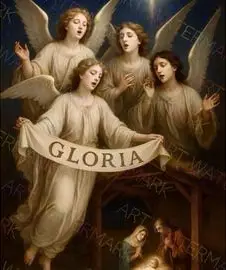
Every Sunday, we sing the Gloria at the beginning of Mass. It is one of the oldest hymns in the Church. Its origin is firstly scripture: Luke 2:13 reads: “And suddenly there was a multitude of the heavenly host with the angel, praising God and saying: Glory to God in the highest and on earth peace to those on whom his favor rests.” In the song of the Gloria during Mass, we sing, “Glory to God in the highest, and on earth peace to people of good will.” That serves as a great basis for a brief reflection I would like to share with regards to chapter one of Magnifica Humanitas (paragraphs 17-45).
In paragraph 23, Pope Leo reminds us, “The Church regards all who sincerely seek “truth, goodness and beauty” as companions on the journey, and considers them as “precious allies” in defending the dignity of every person and in caring for creation.” While many people in our world may not be Catholic or even Christian, those who seek “truth, goodness and beauty”, those “people of good will” are companions of ours, “precious allies” as we Catholics promote dignity and care for creation. We all know people like this. I have friends like this. They may either be on the fringes of organized religion, not religious at all, or possibly religious but not Catholic. These are people who love their families, sacrifice for them, and try to do what is right.
I mention this statement because as a people of God in the world, when possible, we are invited to bring people together into a shared vision, rather than focus on things that divide us. Yes, things divide us Catholics from non-Catholics, from beliefs to actions; however, there is also much ground that unites us Catholics with people who seek “truth, goodness, beauty”, and are “people of good will”. Who are those people around you who are seeking “truth, goodness, and beauty”, those “people of good will”? I invite you to continue reading the encyclical Magnifica Humanitas. Our next reflection will be on the first part of Chapter 2, paragraphs 46-58.
Reflexión sobre «Magnifica Humanitas»
Todos los domingos cantamos el Gloria al comienzo de la misa. Es uno de los himnos más antiguos de la Iglesia. Su origen se encuentra, en primer lugar, en las Escrituras: en Lucas 2:13 se lee: «De pronto se unió al ángel una multitud del ejército celestial que alababa a Dios exclamando: «Gloria a Dios en las alturas y en la tierra paz a los hombres de buena voluntad».». Esto sirve como una excelente base para una breve reflexión que me gustaría compartir con respecto al capítulo uno de Magnifica Humanitas (párrafos 17-45).
En el párrafo 22, el Papa León nos recuerda: «La Iglesia considera compañeros de camino a todos aquellos que buscan sinceramente «la verdad, la bondad y la belleza», considerándolos «preciosos aliados» en la defensa de la dignidad de cada persona y en la custodia de la creación». Aunque muchas personas en nuestro mundo tal vez no sean católicas ni siquiera cristianas, quienes buscan «la verdad, la bondad y la belleza», esas «personas de buena voluntad», son nuestros compañeros, «aliados valiosos» en nuestra labor como católicos de promover la dignidad y cuidar la creación. Todos conocemos a personas así. Yo tengo amigos así. Pueden estar al margen de la religión organizada, no ser religiosos en absoluto, o tal vez ser religiosos pero no católicos. Son personas que aman a sus familias, se sacrifican por ellas y tratan de hacer lo correcto.
Menciono esta afirmación porque, como pueblo de Dios en el mundo, cuando sea posible, estamos invitados a unir a las personas en torno a una visión compartida, en lugar de enfocarnos en las cosas que nos dividen. Sí, hay cosas que nos separan a los católicos de los no católicos, desde las creencias hasta las acciones; sin embargo, también hay mucho que nos une a los católicos con las personas que buscan «la verdad, la bondad y la belleza», y que son «personas de buena voluntad». ¿Quiénes son esas personas a tu alrededor que buscan «la verdad, la bondad y la belleza», esas «personas de buena voluntad»? Los invito a seguir leyendo la encíclica Magnifica Humanitas. Nuestra próxima reflexión versará sobre la primera parte del capítulo 2, párrafos 46-58.